


Gieterij 3, NL-2211 WC
Noordwijkerhout
The Netherlands
English

We use cookies and other tracking technologies to improve your browsing experience on our website, to show you personalized content and targeted ads, to analyze our website traffic, and to understand where our visitors are coming from.


A power generation facility in South Sweden was dealing with an emissions problem that could be traced to the way wood powder was reaching its burners.
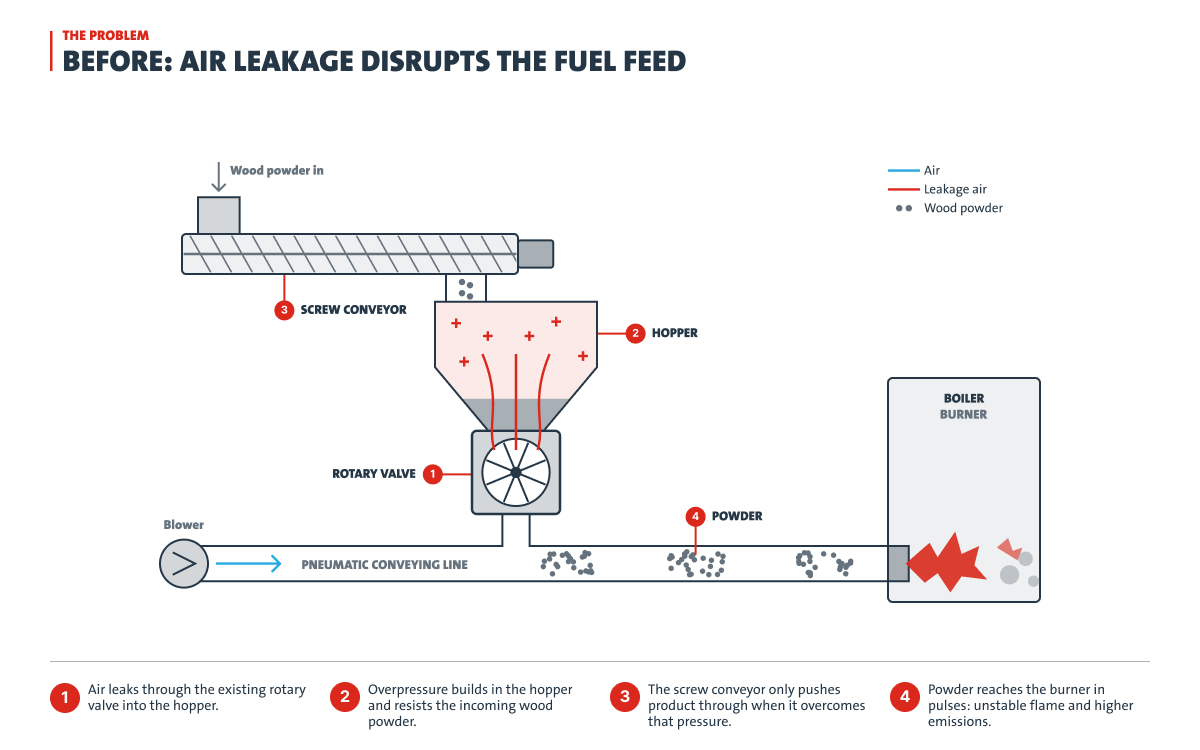
Across the plant’s 12 boiler lines, wood powder was reaching the burners in pulses. The uneven flow made the flame less stable and contributed to emissions above the limits set by the authorities. The source of the problem was farther upstream in the fuel-feed system. Air leakage from the plant’s existing rotary valves was creating overpressure in the hopper below the screw conveyor.
The solution was supplied through LM Bulk & Materialhantering AB, DMN-WESTINGHOUSE's distributor partner in Sweden. Local application support was provided by Håkan Holmqvist.
Pressure was disrupting the fuel flow
Air leaking through the existing rotary valves created overpressure in the hopper below the screw conveyor. As pressure built in the hopper, it resisted the incoming wood powder. The feed became uneven as the pressure generated by the screw conveyor periodically overcame the pressure in the hopper.
That pulsating flow carried through to the burners, contributing to the unstable flame conditions and associated emissions problem.
For the plant, improving combustion consistency therefore meant addressing the fuel-feed behaviour before the powder reached the burners.
Reducing air leakage at the rotary valve
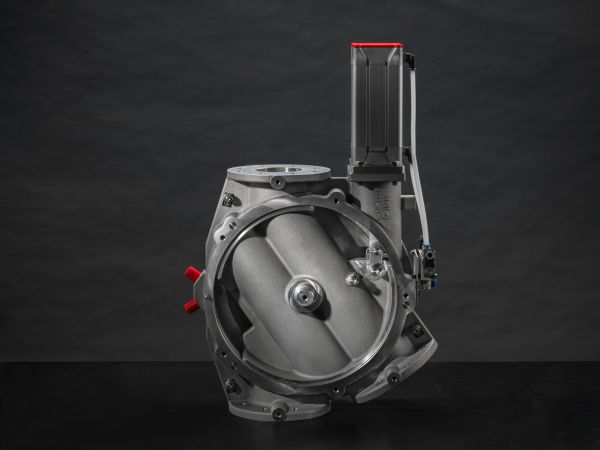
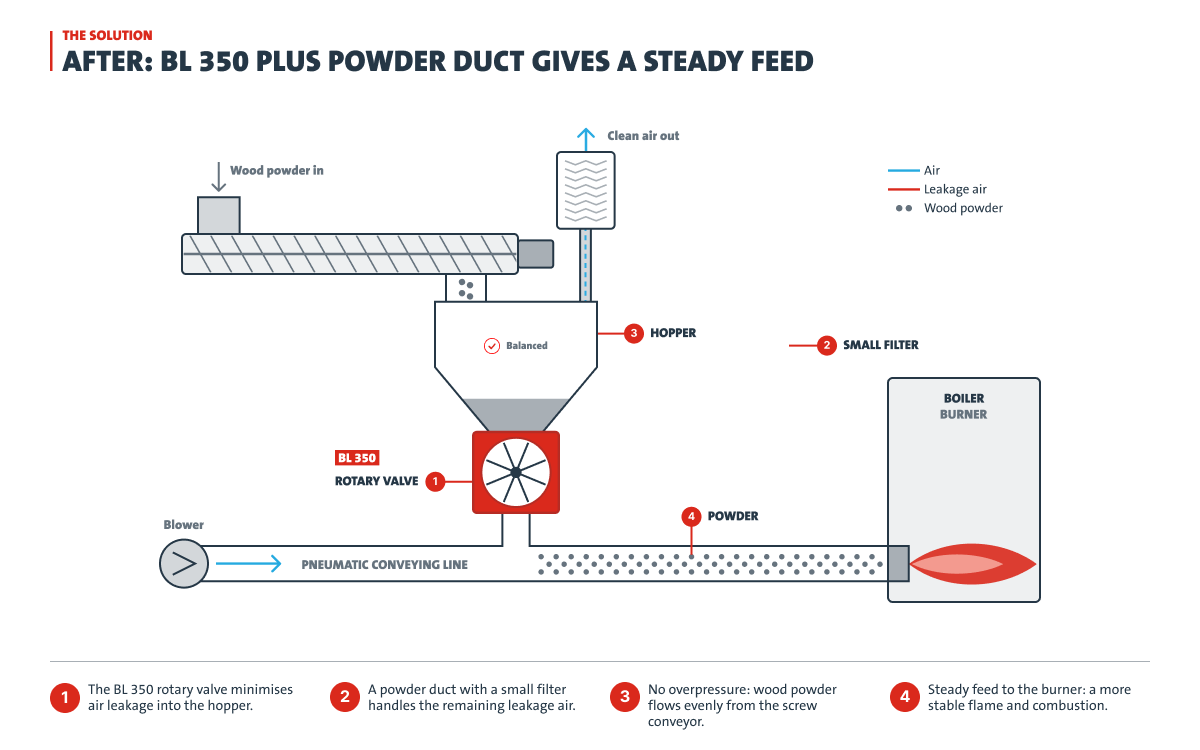
The solution incorporated a DMN-WESTINGHOUSE BL 350 rotary valve together with a powder duct and small filter.
The BL range is designed for metering and pneumatic conveying of powders and granular products, with minimum air leakage listed among its core product characteristics. Biomass is also one of the applications identified for the range.
The BL 350 reduced the amount of air leaking into the hopper. A powder duct with a small filter handled the remaining leakage air so it did not interfere with the wood-powder feed.
By reducing the pressure disturbance below the screw conveyor, the fuel feed to the burner could become more even and the flame less susceptible to changes caused by pulsating product flow.
Phasing in
The first phase in 2025 covered eight of the plant’s 12 boiler lines.
After successful operation on the first eight lines, the customer expanded the solution to the remaining four boiler lines in 2026. The decision to complete the rollout across all 12 lines provides a practical indication of confidence in the solution's performance under operating conditions.
For DMN-WESTINGHOUSE, the project also shows why a rotary valve cannot always be considered in isolation. In this case, air leakage at the fuel-feed interface was influencing product flow farther through the process and ultimately contributing to conditions at the burner.
A closer look at fuel-feed stability
Where combustion performance is being affected by uneven powder flow, the source of the disturbance may sit upstream of the burner.
In applications where air leakage and pressure behaviour are affecting dry bulk product flow, investigating the rotary valve and surrounding process conditions can reveal opportunities to improve feed consistency.
Facing similar fuel-feed stability or combustion-performance challenges? Contact the DMN-WESTINGHOUSE specialists to discuss your application.
Learn more about the BL 350 rotary valve on our website.
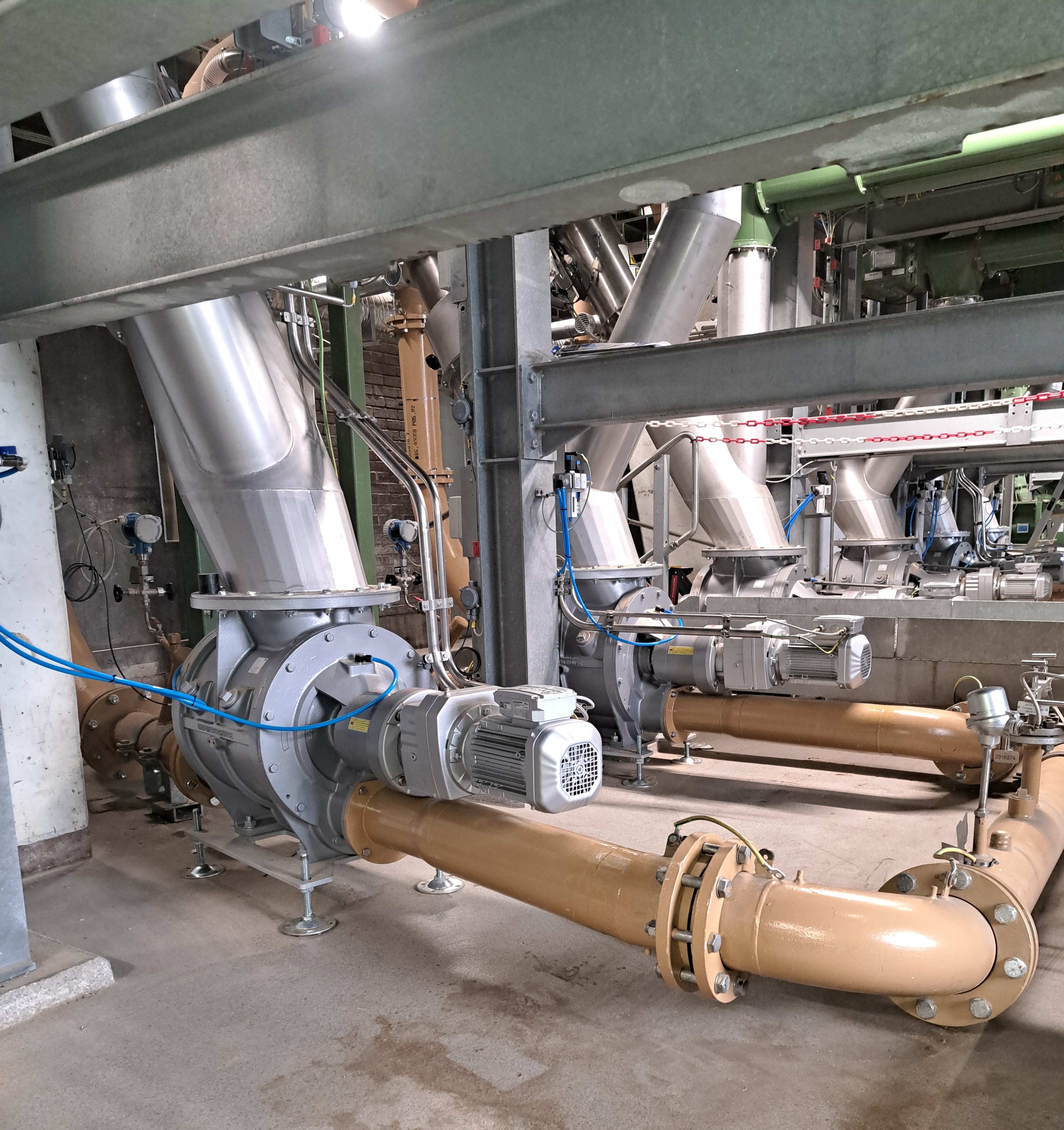
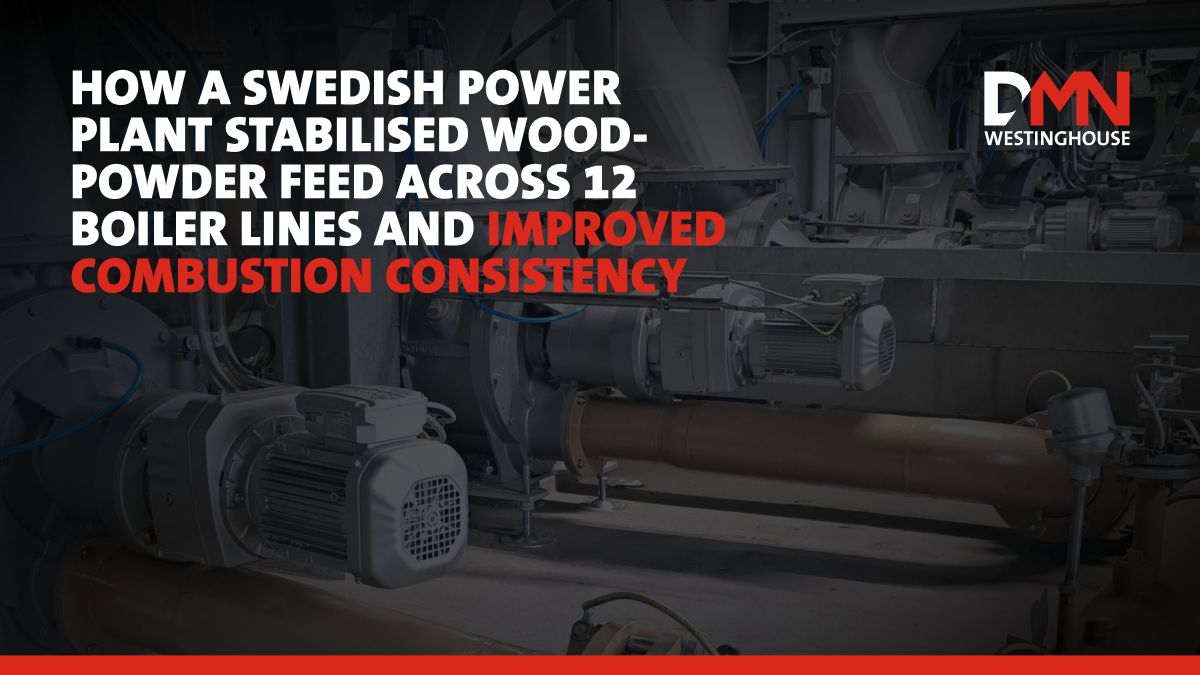
The factory installation with DMN-WESTINGHOUSE BL 350 solution.