


Gieterij 3, NL-2211 WC
Noordwijkerhout
The Netherlands




Our sales team is ready to help you find the right product for every unique situation.
CONTACT US
We use cookies and other tracking technologies to improve your browsing experience on our website, to show you personalized content and targeted ads, to analyze our website traffic, and to understand where our visitors are coming from.




DMN‑WESTINGHOUSE highlights the growing importance of prevention-led design in protecting product integrity and business performance
In today’s tightly regulated and increasingly competitive manufacturing environment, product contamination has evolved beyond a technical issue confined to the production floor. For industries like food processing, pharmaceuticals, and chemicals, it now represents a significant business risk, one capable of disrupting operations, damaging brand reputation, and triggering substantial financial consequences.
The impact of a single contamination incident can be far-reaching. Product recalls, halted production, regulatory intervention, and long-term reputational damage often follow in rapid succession. High-profile events in recent years have demonstrated how quickly such incidents can escalate, affecting not only individual manufacturers but entire markets.
Despite its potential severity, contamination is not inevitable. With the right systems, processes, and engineering approaches in place, it can be anticipated, controlled, and often prevented altogether.
How contamination takes hold
Contamination rarely originates from a single catastrophic failure. More often, it develops gradually, through a combination of small oversights, equipment limitations, and inefficiencies that accumulate over time.
One of the most common risks is cross-contamination between batches. In facilities processing multiple products, even trace residues can have serious implications. In food manufacturing, this may result in allergen transfer; in pharmaceutical production, it can lead to active ingredient carryover; and in other sectors, it may alter product properties such as colour, taste, or consistency.
Another significant factor is residue build-up. Poorly designed or hard-to-clean equipment can allow material to collect in hidden crevices. Over time, these residues may degrade or create environments where bacteria can develop, contaminating subsequent production runs.
Foreign material contamination also remains a persistent concern. As equipment ages, wear and tear, like deteriorating seals or component fatigue, can introduce unwanted particles into the process stream. External contaminants may also enter unnoticed, only becoming apparent when the issue reaches critical levels.
In addition, material degradation caused by mechanical stress, temperature fluctuations, or environmental exposure can compromise product integrity long before it becomes visible.
Beyond the Factory Floor: The True Cost
The consequences of contamination extend well beyond immediate operational disruption.
While recalls and production stoppages carry clear financial costs, the indirect effects often have a greater long-term impact. Downtime disrupts supply chains, reduces output, and affects customer commitments. Increased regulatory scrutiny adds further complexity and cost, placing additional strain on operations.
Perhaps most significant is the impact on brand trust. In industries where product safety and quality are paramount, even a single incident can erode consumer confidence. Rebuilding reputation can take years, making contamination a strategic risk that directly affects long-term competitiveness.
From reaction to prevention
Effectively addressing contamination requires a shift in mindset, from reacting to problems after they occur, to preventing them at the source. At DMN‑WESTINGHOUSE, this approach begins with engineering. Equipment is designed not only to perform efficiently but also to actively minimise the risk of contamination throughout its lifecycle.
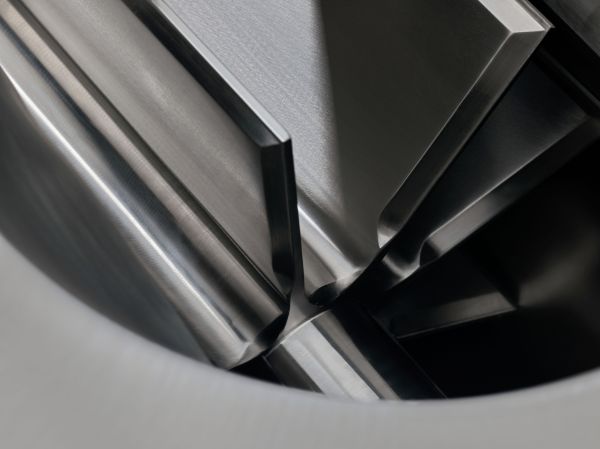
A core focus is reducing product retention within equipment. Smooth internal surfaces, optimised geometries, and carefully engineered rotor designs ensure that materials flow efficiently while minimising the potential for residue accumulation.
Material selection is equally critical. High-grade stainless steel and application-specific sealing materials provide durability, corrosion resistance, and hygienic performance, supporting safe operation in highly regulated environments.
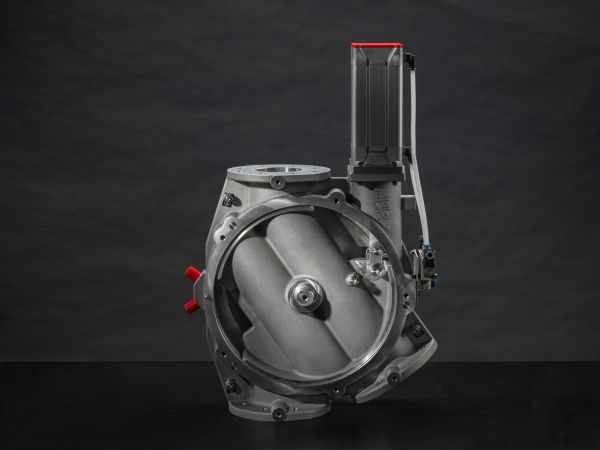
Ease of access is another key consideration. Equipment such as the MZC-I and MZC-II rotary valves are designed for simple inspection and cleaning, enabling thorough validation and helping operators maintain strict hygiene standards.
To further support effective cleaning, systems are engineered to accommodate both Clean-in-Place (CIP) and Clean-out-of-Place (COP) processes, offering flexibility while maintaining operational efficiency.
Intelligent detection: RID 3.0
While prevention is essential, early detection provides a vital additional layer of protection.
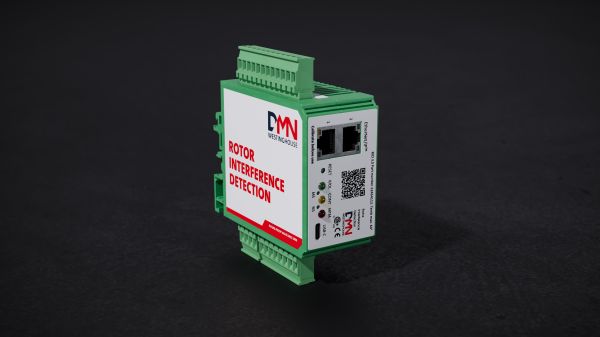
DMN‑WESTINGHOUSE’s RID 3.0 (Rotor Interference Detection) system is designed to monitor rotor performance in real time, identifying irregular movement that may indicate foreign objects, residue build-up, or internal mechanical issues.
By detecting these anomalies early, operators can act before contamination spreads or escalates. This allows risks to be contained within a single batch and can reveal upstream process issues that might otherwise remain undetected.
In this way, RID 3.0 transforms operational data into actionable insight, enabling faster responses and more effective decision-making.
Meeting evolving regulatory demands
Regulatory requirements across industries continue to grow in complexity. Frameworks such as FSMA and HACCP in food production, as well as GMP in pharmaceuticals, demand strict adherence to hygiene and traceability standards.
DMN‑WESTINGHOUSE solutions are designed with these requirements in mind. Equipment aligns with recognised standards such as EHEDG, 3‑A, and USDA guidelines, while supporting compliance with regulations like EC 1935/2004 for food contact materials.
By embedding these standards into equipment design, compliance becomes an integrated element of operations rather than a separate challenge, simplifying validation and ongoing verification processes.
A system-wide responsibility
Contamination control cannot be addressed through a single solution. It requires a comprehensive, system-wide approach.
This includes selecting appropriate equipment, implementing consistent operating procedures, validating cleaning protocols, and maintaining proactive monitoring and maintenance programmes.
When these elements work together, organisations are better equipped to manage risks, maintain product quality, and operate with confidence, even in demanding and highly regulated environments.
Safeguarding the future of manufacturing
While contamination risks will always exist, they do not need to define operations.
Through intelligent engineering and a focus on prevention, DMN‑WESTINGHOUSE helps manufacturers stay ahead of potential threats. Its solutions are designed to prioritise hygiene, reliability, and usability, ensuring not only product quality but also long-term operational resilience.
Ultimately, contamination control is about more than protecting materials. It is about safeguarding consumers, preserving brand integrity, and enabling sustainable success in an increasingly complex manufacturing landscape.
 Understanding NFPA 69: Safety in dry bulk handling with rotary valves
In industries handling dry bulk materials like flour, sugar, or plastic pellets, safety is paramount. Many of these materials can create potentially explosive dust or gas when…
Read more
Clearing the air: understanding air purge systems in rotary valves
The concept of air purging in rotary valves is often oversimplified, confined to the idea of protecting the shaft seals. However, air purge systems serve broader, more critical functions—preventing contamination, blockage, excessive wear, and ensuring the longevity of rotary valve components. This article explores the intricacies of air purge systems, highlighting lesser-known applications and offering insights into optimizing these systems for efficiency and reliability.
Read more
Understanding NFPA 69: Safety in dry bulk handling with rotary valves
In industries handling dry bulk materials like flour, sugar, or plastic pellets, safety is paramount. Many of these materials can create potentially explosive dust or gas when…
Read more
Clearing the air: understanding air purge systems in rotary valves
The concept of air purging in rotary valves is often oversimplified, confined to the idea of protecting the shaft seals. However, air purge systems serve broader, more critical functions—preventing contamination, blockage, excessive wear, and ensuring the longevity of rotary valve components. This article explores the intricacies of air purge systems, highlighting lesser-known applications and offering insights into optimizing these systems for efficiency and reliability.
Read more