


Gieterij 3, NL-2211 WC
Noordwijkerhout
The Netherlands



Our sales team is ready to help you find the right product for every unique situation.
CONTACT US
We use cookies and other tracking technologies to improve your browsing experience on our website, to show you personalized content and targeted ads, to analyze our website traffic, and to understand where our visitors are coming from.



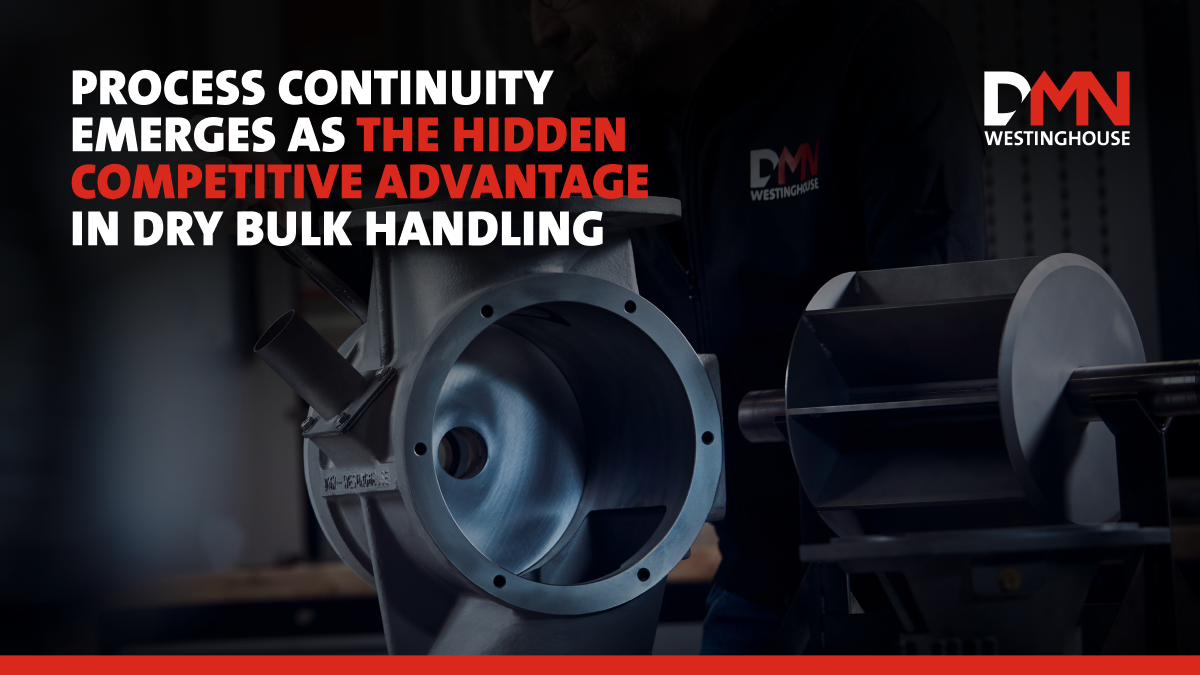
DMN-WESTINGHOUSE highlights how precision valve engineering transforms operational reliability into measurable profitability
In today’s industrial landscape, competitive advantage is rarely defined by dramatic breakthroughs or one-off achievements. Instead, it is built quietly, shift by shift, batch by batch, through consistent, reliable performance. This steady rhythm of uninterrupted production, known as process continuity, is increasingly recognised as a defining factor separating industry leaders from the rest.
For companies operating in dry bulk material handling, process continuity is more than an operational goal; it is a strategic imperative. When pneumatic conveying systems perform seamlessly, materials move effortlessly from intake through processing to packaging. Production targets are met, quality remains stable, and delivery commitments are honoured without disruption.
However, when continuity falters, the consequences escalate quickly. Even minor interruptions can trigger cascading effects, halted production, missed deadlines, compromised product quality, and rising operational costs. In many cases, the financial impact of a short stoppage can exceed the cost of the equipment responsible for it.
Against this backdrop, DMN-WESTINGHOUSE is reinforcing the importance of engineering excellence in sustaining process continuity and enabling long-term profitability.
Beyond uptime: a holistic view of continuity
Process continuity extends far beyond simple equipment uptime. It is the result of multiple elements functioning in harmony, materials, machinery, systems, and people working together to deliver predictable outcomes.
At its core lies material flow consistency. Dry bulk materials must move through systems at controlled rates and concentrations. Any variation can disrupt downstream processes, resulting in inconsistent mixing, inaccurate dosing, and deviations in product quality.
Equally critical is operational predictability. Industrial environments are rarely static, temperature changes, humidity fluctuations, and variations in material properties are constant variables. Equipment must deliver stable performance despite these changing conditions.
Maintenance practices also play a central role. Equipment designed with maintenance accessibility allows servicing to be carried out efficiently within scheduled downtime windows. Similarly, rapid changeover capability enables manufacturers to switch between products quickly without sacrificing hygiene or production time, an essential requirement in industries managing multiple product lines.
Where continuity fails
One of the most common challenges is material buildup and blockages. Dead zones within equipment can cause materials to settle and accumulate over time, while adhesive or hygroscopic materials may stick to surfaces and form layers. Temperature fluctuations can further exacerbate these issues by altering material behaviour, increasing the risk of flow restrictions and system shutdowns.
Air and product leakage is another critical issue in pneumatic conveying systems, where precise pressure differentials are essential. Air loss reduces conveying efficiency, increases energy consumption, and may lead to inadequate material transport. At the same time, product leakage results in dosing inaccuracies, dust emissions, and potential safety hazards.
Wear and degradation further compromise reliability. Abrasive materials gradually erode components, while corrosive substances weaken structural integrity. In more severe cases, fatigue failures may occur unexpectedly, causing sudden and costly disruptions.
Additionally, product contamination, whether through cross-contamination, foreign particles, or improper handling, can force production halts, resulting in material loss and extensive cleaning and validation processes.
Valves: small components, critical impact
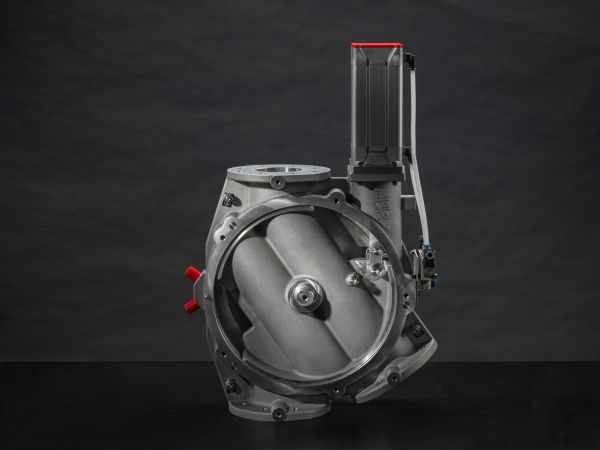
Within these complex systems, rotary valves and diverter valves play a pivotal role in maintaining continuity. Positioned at key control points, their performance directly influences flow regulation, pressure stability, and material routing.
Rotary valves ensure precise dosing by maintaining consistent rotor filling and preventing material bypass. Any deviation can disrupt downstream processes and compromise product quality.
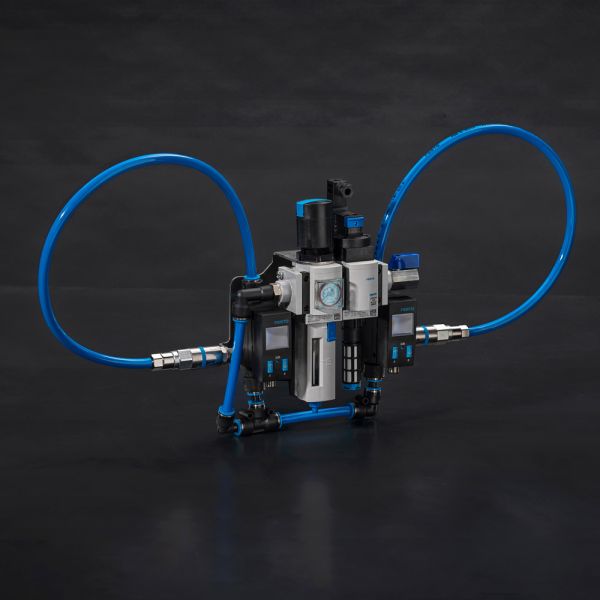
At the same time, these valves act as airlocks, managing pressure differences between system zones. Effective sealing is essential to prevent air leakage and maintain system efficiency. DMN-WESTINGHOUSE addresses this challenge through its advanced shaft seal flow control system, designed to deliver consistent airflow control while protecting seals and preventing residue accumulation.
Diverter valves, meanwhile, ensure accurate material routing across multiple process lines. High-performance designs, such as DMN-WESTINGHOUSE’s 2-TDV, 3-TDV and M-TDV tube diverters, provide fast, precise positioning with leak-tight sealing, supporting automated operations and flexible production strategies.
The business case: total cost of ownership
While premium equipment may carry a higher upfront cost, the long-term financial benefits are compelling.
Unplanned downtime remains one of the most significant cost drivers in industrial operations. Lost production, labour inefficiencies, and schedule disruptions can rapidly erode profitability. In contrast, reliable equipment engineered for continuity minimises these risks.
Maintenance costs also decrease over time. Durable components extend service intervals, while accessible designs reduce the time and labour required for servicing. Lower spare parts consumption further contributes to lifecycle savings.
Energy efficiency is another critical factor. Reduced leakage and optimised performance lower energy consumption, delivering cumulative savings over years of operation.
When viewed through the lens of total cost of ownership, the value of investing in high-quality valves becomes clear, often delivering returns that far exceed the initial investment.
Looking ahead: continuity in the age of smart manufacturing
As industries embrace digital transformation, process continuity is set to become even more critical. Emerging technologies such as predictive maintenance, sensor integration, and digital twins are enabling operators to anticipate and prevent failures before they occur.
At the same time, increasing automation is reducing reliance on manual intervention, making equipment reliability a cornerstone of autonomous operations. Sustainability considerations are also elevating the importance of efficient, durable designs that reduce waste and energy consumption.
A strategic advantage for the future
For DMN-WESTINGHOUSE, process continuity is not simply an operational benchmark, it is a strategic philosophy. Decades of focused innovation have resulted in valve technologies that deliver consistent performance, long-term reliability, and measurable value.
In an increasingly competitive environment, companies that prioritise continuity gain a decisive edge. They operate with greater certainty, maintain higher quality standards, and achieve cost efficiencies that support sustainable growth.
In modern industry, success is not defined by isolated achievements, but by the ability to perform, reliably and consistently, every single day.
 Product Contamination in Dry Bulk Handling: A Critical Risk Demanding Proactive Action
DMN‑WESTINGHOUSE highlights the growing importance of prevention-led design in protecting product integrity and business performance
Read more
Working as one. Thriving as one. One DMN-WESTINGHOUSE.
Dear valued customers and partners, As 2025 draws to a close, we want to express our sincere appreciation for your continued cooperation and trust in DMN-WESTINGHOUSE. As we…
Read more
Product Contamination in Dry Bulk Handling: A Critical Risk Demanding Proactive Action
DMN‑WESTINGHOUSE highlights the growing importance of prevention-led design in protecting product integrity and business performance
Read more
Working as one. Thriving as one. One DMN-WESTINGHOUSE.
Dear valued customers and partners, As 2025 draws to a close, we want to express our sincere appreciation for your continued cooperation and trust in DMN-WESTINGHOUSE. As we…
Read more