


Gieterij 3, NL-2211 WC
Noordwijkerhout
The Netherlands



Our sales team is ready to help you find the right product for every unique situation.
CONTACT US
We use cookies and other tracking technologies to improve your browsing experience on our website, to show you personalized content and targeted ads, to analyze our website traffic, and to understand where our visitors are coming from.



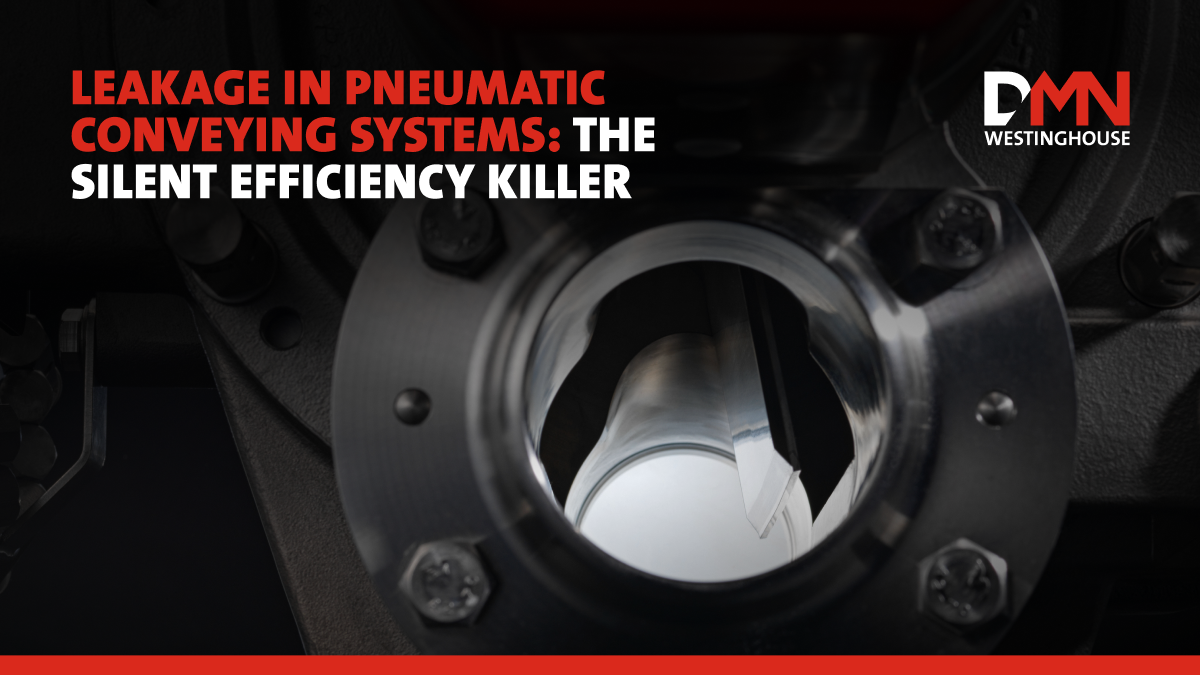
DMN-WESTINGHOUSE highlights how hidden losses undermine performance and how engineering-led solutions restore efficiency
In industrial environments, the most disruptive problems are often the most visible. A blocked conveying line halts production instantly. A contamination incident triggers urgent investigation. Equipment failure brings operations to a standstill and demands immediate repair.
These are the issues that command attention.
Yet, in pneumatic conveying systems, one of the most significant threats to performance operates almost entirely unnoticed.
Leakage, of both air and product, is a silent efficiency killer. It does not announce itself with alarms or sudden breakdowns. Instead, it develops gradually, eroding system performance over time until output, energy use, and product consistency no longer align with expectations. By the time it is identified, the cost has already been absorbed, through wasted energy, lost production capacity, and declining process accuracy.
According to DMN‑WESTINGHOUSE, addressing leakage is no longer just a maintenance concern. It is a strategic priority for manufacturers seeking to improve efficiency, reliability, and long-term profitability
Understanding the Mechanics of Hidden Loss
Pneumatic conveying systems rely on carefully controlled pressure differentials to move materials efficiently through pipelines. Every component within the system plays a role in maintaining this balance. When leakage occurs, it disrupts these finely tuned conditions at a fundamental level.
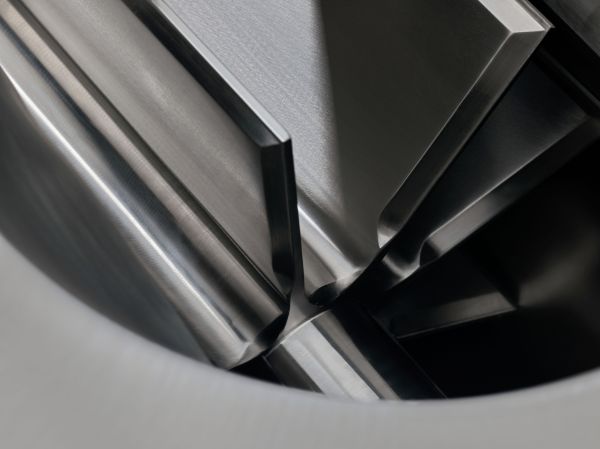
Air leakage typically develops where pressure boundaries are compromised. In rotary valves, for example, the small clearances required between rotor and housing for smooth mechanical operation can also become pathways for air to escape. Over time, wear, temperature variation, or slight deviations in tolerances can enlarge these clearances, creating continuous leakage points.
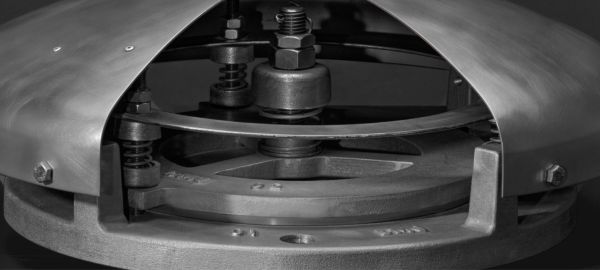
Shaft seals represent another vulnerable area. As rotating shafts pass through valve housings, seals are required to contain pressure. As these seals degrade, often gradually and without visible warning, leakage increases.
Leakage is not confined to valves alone. Flanged connections, gaskets, and component interfaces across the system can contribute to air loss if not installed or maintained correctly. Even minor imperfections can have measurable effects on overall performance.
At the same time, product leakage can occur. Fine powders such as flour, milk powder, or pharmaceutical ingredients are particularly prone to escaping through minimal gaps. This results not only in material loss but also in dosing inconsistencies and compromised batch accuracy.
Individually, these leak points may appear insignificant. Collectively, they can have a substantial impact on system efficiency.
The Compounding Cost of Leakage
The true cost of leakage lies in its cumulative effect. From an energy perspective, any escaping air must be replaced. Blowers and compressors are forced to work harder to maintain operating conditions, increasing power consumption without delivering additional output. Over extended operating periods, this translates into significant and ongoing energy costs.
System capacity is also affected. When airflow and pressure are reduced, conveying efficiency drops. Systems designed to meet specific throughput targets gradually underperform, creating production bottlenecks and limiting plant output.
Material loss introduces further operational challenges. Leakage at valves leads to inaccuracies in dosing, particularly in processes requiring precise measurements. Over time, even minor inconsistencies can affect product quality, inventory control, and overall process reliability.
Dust emissions are often the most visible symptom. Escaping fine particles contribute to poor housekeeping, increase safety risks in dust-sensitive environments, and require additional mitigation measures, all of which add cost and complexity.
In addition, leakage accelerates equipment degradation. Components exposed to unintended airflow or abrasive materials wear faster, increasing maintenance frequency and reducing service life.
Taken together, these factors elevate leakage from a minor inefficiency to a critical operational concern.
Valves at the Centre of Leakage Control
Within pneumatic conveying systems, valves play a central role in managing leakage and are often the most critical points of vulnerability.
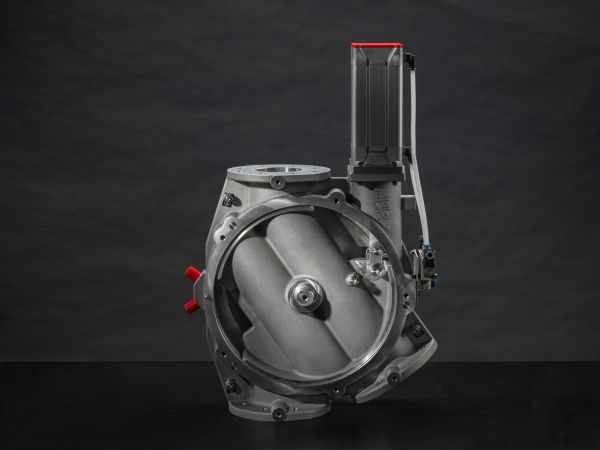
Rotary valves must perform a dual function: acting as airlocks while allowing continuous material flow. Achieving this balance requires precise engineering. Excessive clearance leads to leakage, while insufficient clearance can hinder performance or accelerate wear.
Diverter valves face similar challenges. They must isolate flow paths completely to ensure accurate routing of materials. Any compromise in sealing can result in cross-contamination, product loss, and reduced process control. These components operate at key transition points within the system, their performance has a disproportionate impact on overall efficiency.
Engineering Solutions: A Design-First Approach
For DMN‑WESTINGHOUSE, effective leakage control begins at the design stage. Rather than treating leakage as a problem to correct later, it is addressed through precision engineering and application-specific solutions.
Tight control over manufacturing tolerances is fundamental. Valve clearances are carefully defined based on the specific material being handled. Fine powders require tighter sealing to prevent bypass, while abrasive materials demand slightly larger clearances to reduce wear. This tailored approach ensures optimal performance across diverse applications.
Material selection and wear resistant solutions, like coatings, also play a critical role. High-grade stainless steel provides corrosion resistance, mechanical strength, and long-term dimensional stability. This helps maintain sealing integrity over extended operating periods, even in demanding environments.
Advanced sealing technologies further enhance performance. Controlled airflow shaft sealing systems, for example, protect seals from material ingress while maintaining consistent sealing conditions. By preventing buildup and reducing wear, these systems extend seal life and minimise leakage.
For diverter valves, inflatable seals provide a more adaptive solution than traditional static designs. By conforming to sealing surfaces and adjusting to pressure variations, they deliver more reliable isolation in complex or variable operating conditions.
Additional design features, like optimised venting, outboard bearings, and modular construction, support consistent performance while simplifying maintenance and inspection.
From Detection to Proactive Optimisation
While prevention is essential, effective leakage control also requires visibility.
Operational changes often provide early warning signs. Reduced throughput, increased energy consumption, and dosing inconsistencies may all indicate developing leakage issues. Increased dust accumulation can also signal deteriorating seals or excessive clearances.
More advanced monitoring techniques are enabling earlier detection. By tracking airflow, pressure stability, and overall system performance, operators can identify inefficiencies before they escalate into larger problems.
This shift toward data-driven monitoring supports proactive maintenance strategies, reducing unplanned downtime and improving reliability.
The Strategic Value of Minimising Leakage
Investing in low-leakage equipment is not merely a technical improvement, it is a strategic business decision.
Energy savings alone can deliver rapid returns. Combined with improved throughput, reduced maintenance requirements, and enhanced product consistency, the long-term financial benefits become substantial.
Recovered system capacity is particularly valuable. Incremental improvements in efficiency can unlock additional production without the need for major capital investment, an important advantage in high-demand environments.
At the same time, reducing material loss and improving process accuracy supports quality assurance and cost control, strengthening overall operational performance.
Protecting Performance by Controlling Loss
Leakage may be difficult to detect, but its impact is far-reaching.
By addressing it through precision engineering, advanced sealing technologies, and application-specific design, manufacturers can significantly improve both efficiency and reliability.
For DMN‑WESTINGHOUSE, minimising loss is central to delivering long-term value. Every design decision, from optimised clearances to intelligent sealing solutions, is focused on protecting system performance over time.
In pneumatic conveying, efficiency is defined not only by how much material is moved, but by how much is prevented from escaping. And ultimately, controlling these hidden losses is what enables consistent output, reduced costs, and sustainable industrial success.
 Product Contamination in Dry Bulk Handling: A Critical Risk Demanding Proactive Action
DMN‑WESTINGHOUSE highlights the growing importance of prevention-led design in protecting product integrity and business performance
Read more
Working as one. Thriving as one. One DMN-WESTINGHOUSE.
Dear valued customers and partners, As 2025 draws to a close, we want to express our sincere appreciation for your continued cooperation and trust in DMN-WESTINGHOUSE. As we…
Read more
Product Contamination in Dry Bulk Handling: A Critical Risk Demanding Proactive Action
DMN‑WESTINGHOUSE highlights the growing importance of prevention-led design in protecting product integrity and business performance
Read more
Working as one. Thriving as one. One DMN-WESTINGHOUSE.
Dear valued customers and partners, As 2025 draws to a close, we want to express our sincere appreciation for your continued cooperation and trust in DMN-WESTINGHOUSE. As we…
Read more